
Saint Domingue
Géricault Life
Un Moulin à sucre tourné par l’eau…, au Brésil (detail) Frans Post, 1650-1655 Louvre.
Introduction
Théodore Géricault’s relations in Saint Domingue owned a number of plantations in the northern part of France’s richest colony (modern Haiti). Some of these plantation owners had a critical influence on Géricault’s life and his career. In order to get a sense of what Saint Domingue was like in the latter part of the eighteenth century, we turn to Médéric-Louis-Élie Moreau de Saint-Mery’s 1797 and his description (abridged) of the parish of the Northern Plain (Plaine du Nord). We will then take our first look at Géricault’s Saint Domingue relations.
Moreau de Saint-Mery
“…The parish of Plaine du Nord is bordered on the north by the sea; to the south by part of the parish Dondon; to the east by the parish la Petite Anse & the parish du Cap; and to the west by the parish l’Acul. The parish of Plaine du Nord, which is quite small, has a very odd shape, which results from the winding nature of the rivers which serve as borders to the east and west, and because of its mountainous extremities in the north and south.
The crops first grown in this parish were indigo, and then cacao; sugar cane and coffee are preferred now. The soil of the parish, however, is not highly regarded. In those parts where the soil can be said to be fertile, the earth is so wet that the cane cannot perfectly mature. There are lands, such as those of the Breda plantation, where the quality of the earth is quite remarkable; but in other parts, above all in the canton of Morne-Rouge, the soil is dry. The cane in the dryer areas is beautiful, but without juice.
The canton of Grand Boucan, which is the highest part of the parish, finds its border on the western slope of the mountain known as Bonnet a l’Eveque (the Bishop’s Hat). The aspect of this mountain is quite frightening to look upon. It is made up entirely of an enormous mass of limestone rocks, between which stand superb trees – which seem to rise from a primitive age, climbing high out of uncultivated earth, liberally watered by frequent rains; these rains, their leaves, and decaying vegetation provide all the nourishment the trees require. The mountain is all precipices, pits, and cavernes, the latter being filled with immense stalactites. Towards the middle of the moutain top is a basin, or reservoir, about one hundred and fifty feet long and fifty feet wide. The water is pure and still, and provides nourishment to enormous crayfish, crabs, and magnificent eels; but the temperature of the water is so cold that attempts to introduce different species of fish always prove futile, the fish are invariably discovered dead within a day. The scene of rocks piled one upon the other can be profoundly tranquil; the basin, caves, and trees affirm together the unfolding of nature’s enduring power. Buccaneers, who long ago found good hunting grounds for game and wild pigs here, named the place Grand Boucan. The gorge of Grand Boucan is one of the routes connecting Plaine du Nord and du Cap with Dondon. This gorge, which begins at the plantations Longuemalle (sic also Longmalle) & Besson, is 400 toises in width and 1800 toises in length… (1 toise = 1.92 meters)…”
Jean-Guillaume Robillard
Jean-Guillaume Robillard is one of Théodore Géricault’s most important Saint Domingue relations. (Jean-Guillaume is also an important figure in the slave uprising which broke out in Saint Domingue in the summer of 1791, a role we will consider shortly.) Understanding the impact the Saint Domingue Robillards had upon Théodore Géricault requires us to learn more about each of these hitherto unknown individuals.
Jean-Guillaume Robillard was the younger brother of Pierre-Antoine Robillard, the husband of Théodore Géricault’s great aunt, Marie-Thérèze De Poix, two individuals well known in Géricault scholarship. (I discuss this childless couple elsewhere in this issue.) Jean-Guillaume Robillard was born in Besançon, France, in 1727. We know nothing of Jean-Guillaume’s early life, or the year he arrived in the colony. The records of Jean-Guillaume’s military service in Saint Domingue provide a useful set of dates. In August of 1753 we find Jean-Guillaume serving as a dragoon in the colonial militia in the parish of Plaine du Nord, and then in the same position after being transferred to the parish St. Louis, or Morin. In 1768 Jean-Guillaume was commissioned as a Lieutenant in the parish infantry and made captain in 1773. Three years later, in 1776, Jean-Guillaume was transferred back to the parish of Plaine du Nord. Two years later in 1778, he was appointed Captain of Foot. In September of 1788, Jean-Guillaume Robillard was discharged for reasons of infirmity still holding the rank of captain; thus, bringing an end to an honorable career of thirty-five years in the service of the colony and his king, as he himself put it.
Jean-Guillaume Robillard’s duties in the colonial militia did not prevent him from advancing his own interests, however. In 1772, Jean-Guillaume Robillard purchased Bonnet in the canton of Grand Boucan in the parish of Plaine du Nord. This purchase permits us to bring Jean-Guillaume Robillard’s life in Saint Domingue into much sharper focus.
On the de L’Isle map below – locate the island: Isle de la Tortue in the top center; move across the channel to the north coast of the main island; travel east along the coast to Cap François and Le Cap. The gorge of Grand Boucan (unmarked) is situated close by Bonnet a l’Eveque, the large mountain south of Le Cap.
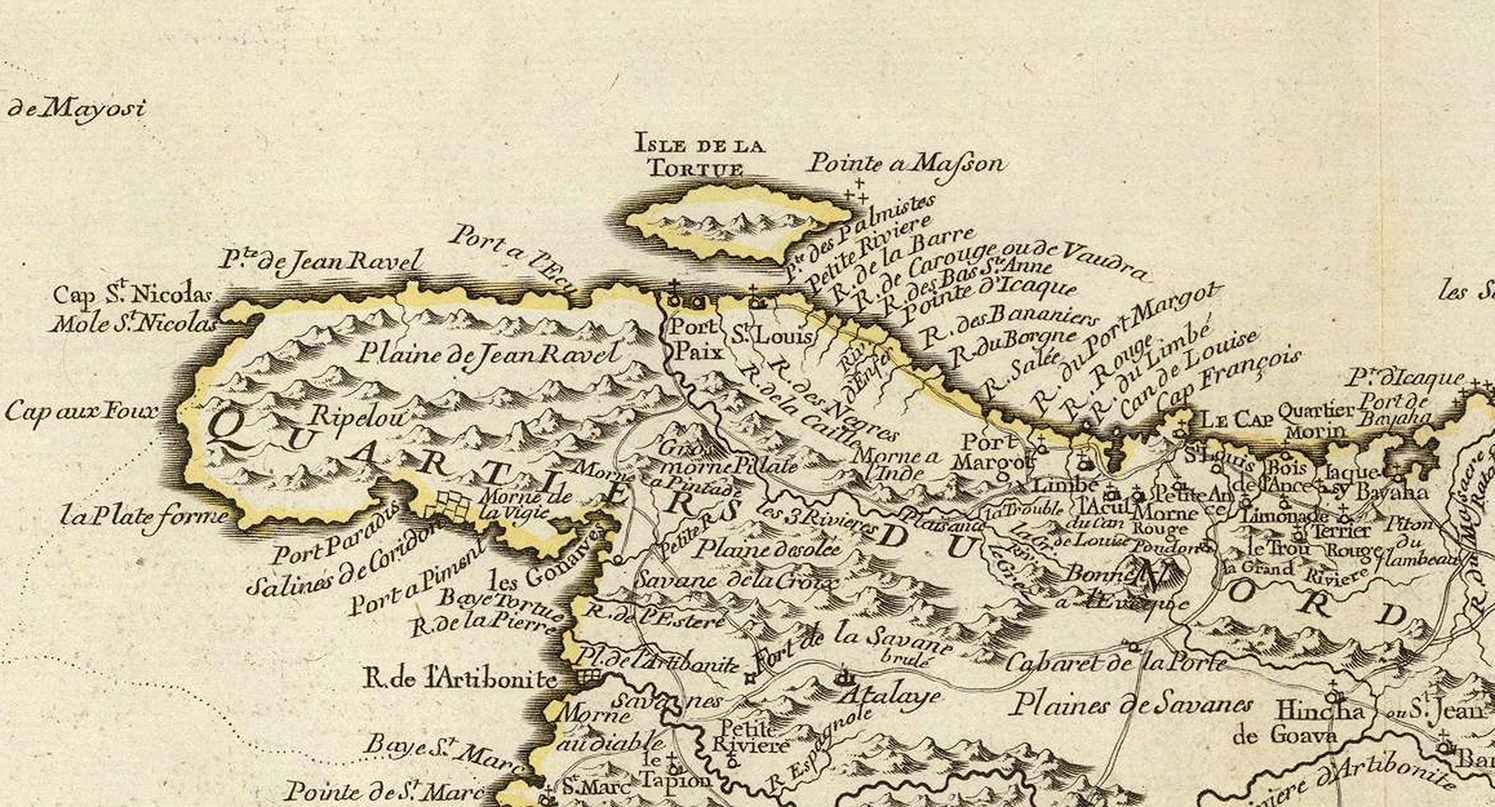
Map: 1725 Guillaume de L’Isle (detail), courtesy of David Rumsey (David Rumsey Maps).
Bonnet
Bonnet was one of the most important properties the Robillard family owned in Saint Domingue. The land originally belonged to nobles living in France. The nobles hired managers and tried growing different crops, all the while debts mounted. These debts could not be paid, which forced the sale of the property to another family of aristocrats who repeated the cycle, and who also failed to make a succes of Bonnet. By this stage the nobles were no longer in control; Bonnet effectively ‘belonged’ to the creanciers, those owed money. Jean-Guillaume Robillard was among this group of creanciers, or creditors, looking to be paid. The main difference between Jean-Guillaume and the other creditors based in France, is that Jean-Guillaume Robillard lived in the colony, and had a keen interest in actually acquiring the plantation. He tried on at least one occasion to purchase Bonnet from the other creanciers prior to the final sale, but they refused. With debts mounting, and no rescue in sight, the creanciers in the end agreed. On April 13, 1772, Jean-Guillaume Robillard acquired Bonnet and with it the plantation’s debts.
Moreau de Saint-Mery, in his discussion of Plaine du Nord, outlines clearly the difficulties of successfully growing sugar cane in the parish. Bryan Edwards, a contemporary English observer, arrived at the same conclusions, remarking on the relatively low annual yield of cane from parish land, compared with the yield of other parishes in the colony. One independent consultant judged the Bonnet land, in particular, to be too poor to ever profitably produce sugar. Given these facts, we are compelled to wonder why Jean-Guillaume would take such a risk.
Owning a plantation meant something, even one as financially distressed as Bonnet. An opportunity to purchase rank and status may well have played a part in Jean-Guillaume’s decision. The Bonnet plantation did have significant assets. The plantation’s sucrerie, or sugar refinery, was valued at 40,000 livres and conferred a certain status upon the property. According to Saint-Mery, there were only 28 such sucreries in Plaine du Nord, making Bonnet one of a limited number of plantations in the parish to possess the machinery to process and refine cane into sugar. A sucrerie on site also greatly improved the opportunity to increase revenues – both from the sugar cane grown on the property, and from processing and refining the cane of other growers into sugar for a fee. Bonnet had buildings, houses, cattle, horses, a lime kiln – ample stands of timber, which could be cut and sold, and land for other crops. Still, profit proved elusive. Jean-Guillaume Robillard evidently believed that he could succeed where others had failed.
The principal challenge Jean-Guillaume Robillard faced in the spring of 1772, however, was not the condition of the soil, or of the buildings and equipment, but rather that of the Bonnet plantation’s one hundred and fifty-five slaves struggling to stay alive and healthy on the plantation. Absentee ownership often resulted in indifferent care of plantation property, an indifference which extended to the people who were regarded simply as ‘property.’ The sales agreement of 1772 states explicitly that Jean-Guillaume could not attempt to use the deaths of any animals or slaves, subsequent to the sale, to justify a reduction in his obligations to the creanciers. We know that Jean-Guillaume was deeply unhappy about the poor health of the slaves. Many were old, young, and infirm. Many Bonnet slaves suffered from yaws, a contagious disease of the tropics with results in lesions of the skin and deep, ‘rasberry-like’ ulcers.
Bonnet did have a hospital, as did many plantations, and we have good reason to believe that Jean-Guillaume Robillard tried to improve the conditions of the slaves in his care, even if these incentives were purely financial. Sick slaves could not provide Jean-Guillaume with the labor he required to pay off the plantation’s debts. We would expect Jean-Guillaume paid for consultations with physicians and for medical treatments of some kind. The island’s most famous ‘healer,’ Simon Worlock, may have been involved. Worlock possessed no medical training, but knew a lot about the new science of inoculation. He arrived in Saint Domingue from France around 1774-5 and promptly set about selling his services to plantation owners, inoculating their slaves. Business boomed. Worlock is credited with saving countless lives and growing rich in the process. We find Worlock’s name on a list of guests invited to a Robillard wedding celebrated on Jean-Guillaume’s plantation in 1788. Perhaps a professional relationship existed as well.
So, how many of Jean-Guillaume Robillard’s trials and successes were discussed among family members in France? I believe family members in France were keenly interested in the affairs of family on the island. Evidence suggests that Jean-Guillaume spent time in France after retiring from the militia. In 1791, the year of Géricault’s birth, at least three generations of Robillards were living in Saint Domingue. Jean-Guillaume seems to have been the ‘most senior’ of this community, in part because of his age, and because he owned Bonnet. Two of his nephews joined in on the island: Louis-Nicolas-Joseph Robillard de Péronville, who carried the family name and his brother Charles-Stanislas Robillard. Both married women from the French Antilles, one marrying at Bonnet. Each family produced a child born in Saint Domingue. News of the marriages and the births will have traveled back and forth between France and Saint Domingue, as letters did between different family members on a regular basis until revolution, rebellion, and war ended regular communication. Jean-Guillaume Robillard’s personal experiences in the slave rebellion of the summer of 1791, alluded to earlier, will have been a particular topic of interest and concern to family in France. At that point, news was still traveling across the Atlantic largely unimpeded.
In the latter part of August, 1791, rebel slaves in northern Saint Domingue moved from parish to parish destroying plantations and exhorting others to join the rebellion. Cane fields and buildings burned; the damage was enormous and terrified the colonists. When the rebel slaves entered the Plaine du Nord on August 25th, the Robillard sugar plantation was among the first to be attacked. As it happened, Jean-Guillaume was then in the town of Le Cap. One of his slaves, the ‘commandant’ refused to surrender and was murdered. The other Robillard slaves joined the rebellion, or sought refuge in the mountains. The rebel slaves destroyed much of the plantation’s machinery and buildings. News of the revolt spread quickly beyond the island, and resonated on both sides of the Atlantic. The revolt spread and within just a few years most Saint Domingue colonists had fled from the island.
I believe Jean-Guillaume and other Saint Domingue Robillards provided family members in France with letters filled with personal accounts of the rebellion, as well as details of the attack on Jean-Guillaume’s plantation. Family in France will have had many questions about events in Saint Domingue, and had important news of their own to share with family there. Reports of the violent revolt in Saint Domingue began filtering back to France around the same time as Pierre-Antoine Robillard and Jean-Baptiste Caruel were preparing to move into the Hôtel de Longueville. The Saint Domingue destruction rocked the government; the rebellion would be a topic of discussion across Europe and eventually much of the world, not just for family members in France.
My view is that many, if not most, of Jean-Guillaume’s relations in France were deeply affected by the attack on his plantation and the murder of his slaves. We believe that story of the destruction of the Grand Boucan plantation in August of 1791 quickly became a fixture of Géricault-Caruel-Robillard family lore, to be told and retold. Indeed, I believe that for a variety of reasons, the importance of the Saint-Domingue Robillards to the family in Paris grew in the years following, becoming manifestly greater each time a surviving family member from Saint Domingue arrived back in France. All had stories of their own to tell – stories of their own trials during the rebellion, and of life in the island colony before events turned their world upside down. All the Saint Domingue Robillards who came to Paris spent time at the palace of the Hôtel de Longueville, and the apartments of Pierre-Antoine Robillard and Marie-Thérèse de Poix on the rue de Belle Chasse. Some established permanent residences nearby.
Théodore Géricault grew up with these ‘real-life’ accounts of life in France’s richest colony, hearing them first as a young child from family members in Paris and Rouen, stories told after dinner, or before bed, of cane-fire, jungle, and drums in the night; and then, as Théodore grew older, directly from the lips of his Saint Domingue relations – listening to their tales of life in the colony – tales of riches, suffering, and the island’s fight for freedom.
* Description Topographique, Physique, Civile, Politique et Historique de la Partie Française de L’Isle Saint-Domingue, Vol. I – Philadelpia, 1797 – Médéric-Louis-Élie Moreau de Saint-Mery.