Landon – Annales
Géricault Life
The Public Viewing David’s Coronation (detail) Léopold Boilly, 1810 (Courtesy of the Metropolitan Museum of Art)
Landon’s Annales
While viewing and discussing muesum pieces, audiences in Théodore Géricault’s time often consulted reference materials, as we can see in the contemporary paintin by Boilly above, and almost certainly do so before and after museum visits as well. The national collection housed at the re-purposed Louvre, enhanced by art treasures seized by conquoring French armies in Flanders and Italy, was a new wonder of the western world, and a site of intense interest to all interested in art in France and beyond. Publishers recognized new market opportunities and scrambled to meet the demands of a public keen to establish a closer connection with this collection of paintings, statues, and bas-reliefs.
Charles Paul Landon (1760-1826), the painter, was perhaps the most important publisher on art and the arts in Paris for much of Théodore Géricault’s lifetime. After studying under Regnault. Landon won the Prix de Rome in 1792, but elected to remain in France and work.
We begin with Landon’s Annales du Musée et de l’Ecole moderne des beaux arts, which Landon began publishing in Paris in 1801. Landon was already well established as a critic at this point in his career. In this article we wish simply to introduce Landon’s Annales and allow readers to examine Landon’s approach to publishing reproductions of pieces from the Museum Central des Arts at the Louvre.
We invite readers to compare Landon’s approach with that of Antoine Michel Filhol and his publication Cours de Peinture discussed elsewhere in this issue. As noted, Théodore Géricault’s relations Louis Robillard de Peronville and Pierre Laurent formed their own partnership in 1802 to provide consumers with engravings of the highest quality of pieces in the national colllection, an enterprise known as the Musée français.
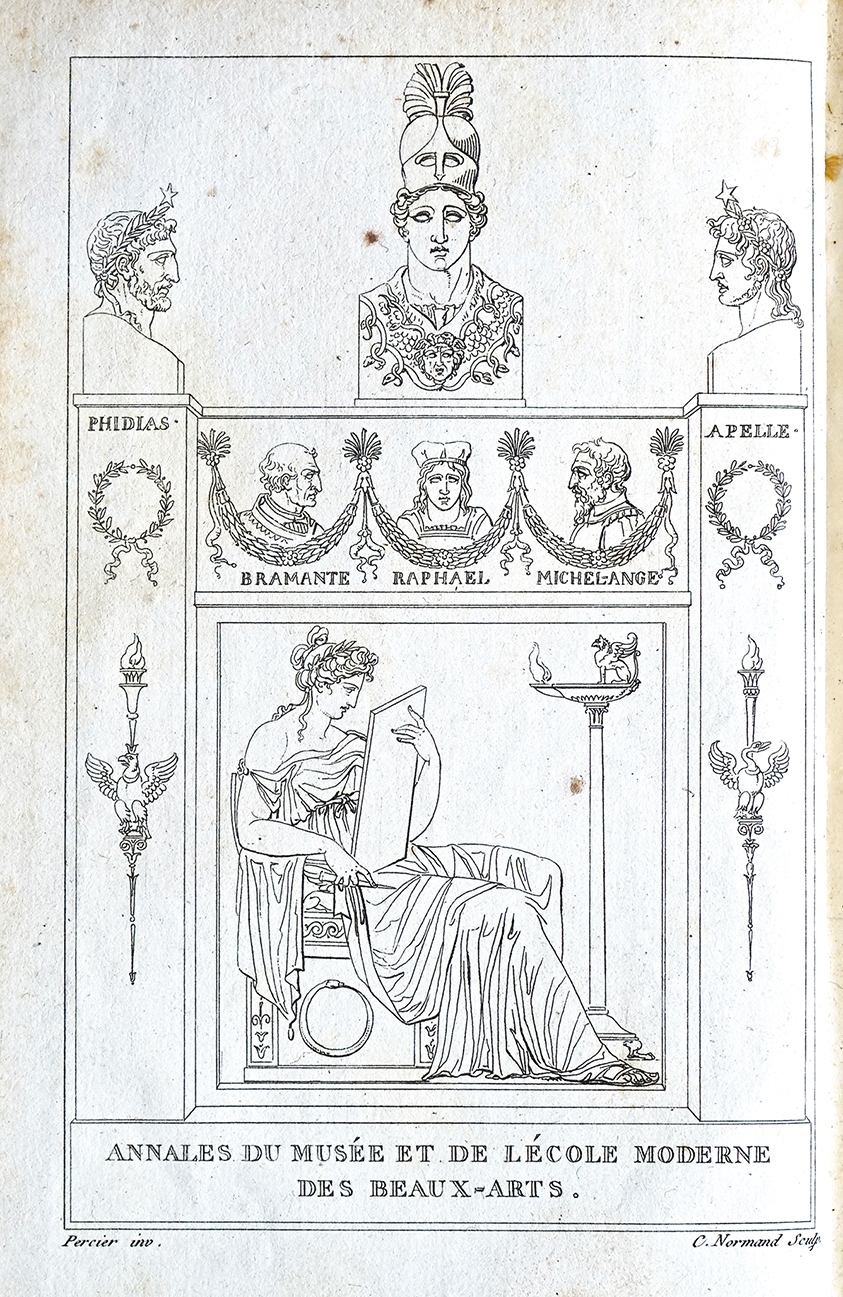
Frontispiece plate: Annales du Musée et de L’École Moderne des Beaux-Arts, 1802. Volume 1.
Frontispiece Plate
The outline method employed in the title plate distinguishes Landon’s Annales engravings. However, the named artists chosen by Landon to appear in this title plate are every bit as important, in our view. Michelange (Michelangelo,) Raphel, and Bramante were familiar to many of Landon’s readers, and some will have also known Apelle (Apelles) and Phidias. (Information on all these individuals is easy to locate.) Landon places these classical and renaissance giants at the forefront of his discussions of the arts – invoking their spirits and defining clearly the aesthetics Landon privileges in his Annales du Musée et de l’Ecole moderne des beaux arts.
Plate 5
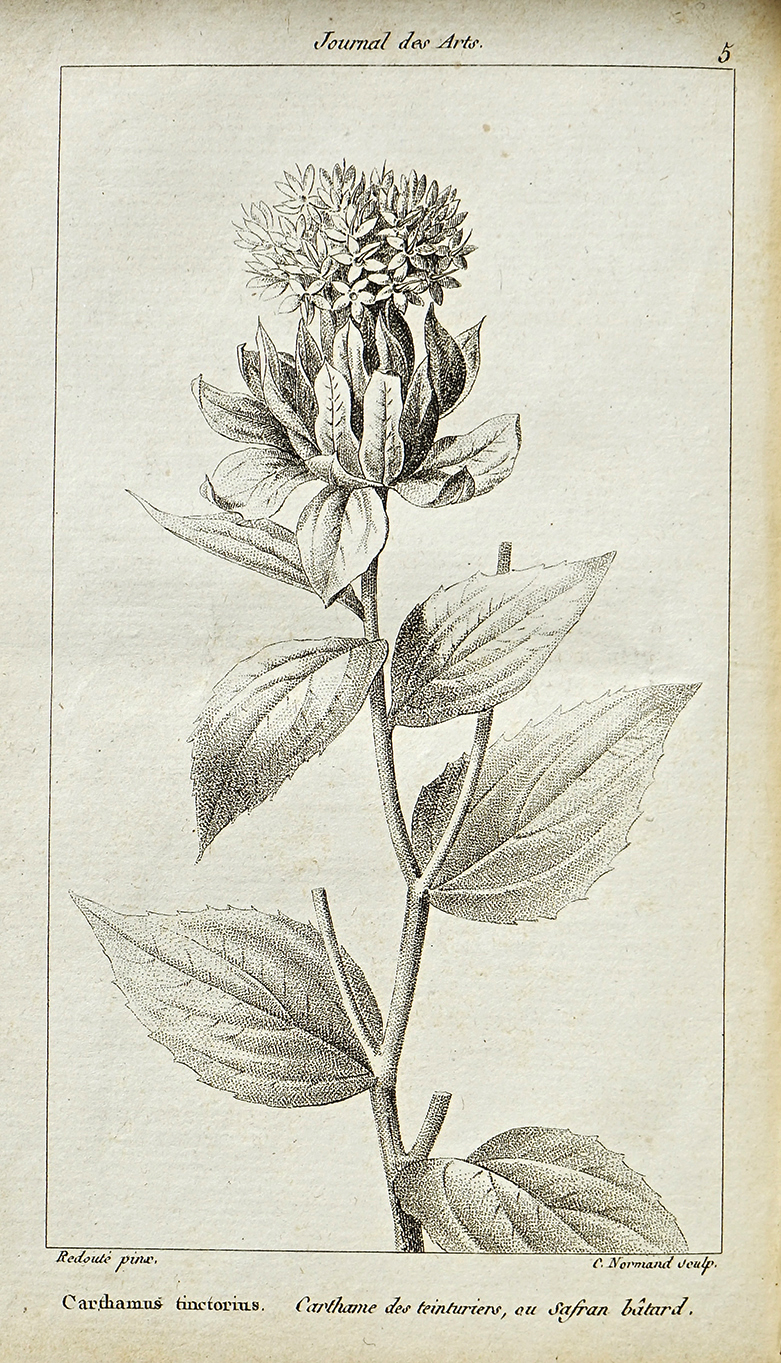
Plate 5: Carthame de teinturiers, ou Safran bâtard, Annales…, 1802. Volume 1.
Plate 5 of Volume I, Carthame de teinturiers, ou Safran bâtard (Dyer’s Saffron) is equally important and instructive. Plate 5 was first published in the third livraison (issue) of the Annales in the spring of 1801, and then again in 1802. As he does with the title plate, Landon uses plate 5 to establish early on the parameters of Annales inquiries. Landon’s short article and engraving of Safran bâtard, originally from Egypt, is both an inquiry into antiquity, and an investigaton in modern arts, science, and manufacturing. The accompanying commentary explained the significance and origin of Safran bâtard to contemporary readers. Scientific engravings of this quality and accuracy describing, or introducing, plants such this as were immensely important and highly prized in France and abroad. The Journal des Arts title above the plate identifies it as one of a collection of engravings Landon had produced for a different project: the Journal des Arts, des Sciences, et de Littérature, a topic we will explore in our next article.)