
1785 Robillard-Roullit Marriage
Géricault Life
Contrat de Mariage entre M. Robillard et Mlle. Roullit, 1785, August 22 (detail) – DPPC NOT *SDOM 38. Image courtesy of the Archives Nationales (France)
My view is that each of Théodore Géricault’s relatives and friends played important parts in his development. We have already discussed Jean-Guillaume Robillard, Louis Robillard de Peronville, his wife Marie-Anne-Charles de Barras, and their daughter Zoé. We now turn to the second known nephew of Jean-Guillaume Robillard in Saint Domingue, the younger brother of Louis Robillard de Peronville: Charles-Stanislas Robillard and his wife Marie-Françoise-Catherine ‘Katherine’ Roullit.
On August 22, 1785, Charles-Stanislas Robillard, habîtant de la paroisse de Borgne, and Marie-Françoise-Catherine Roullit signed their marriage contract at the Roullit family plantation in Gros Morne, Saint Domingue. Three of Théodore Géricault’s Saint Domingue Robillards were present to witness the contract: Jean-Guillaume Robillard, Captain in the Le Cap Battalion of the colonial Militia, habitant of the Plains du Nord, and uncle of the groom; Louis-Nicolas-Joseph Robillard de Péronville, officer of the Limonade Battalion of the Militia, habitant of Trou, and brother of the groom; and M. Michel Robillard, habitant of Limbé and cousin of the groom. The couple then consecrated their marriage the next day on August 23, 1785, État-Civil, Le Borgne, page 11 – Archives Nationales (France.)
The marriage contract of August 22, 1785, details the financial terms agreed upon by the Robillard and Roullit families. The Robillard-Roullit contract established a community of biens, or goods, between Charles-Stanislas Robillard and Marie-Françoise-Catherine Roullit, under which each agreed to bring goods, or property (land), of a fixed value to their union. Their marriage contract sheds more light on the lives of Géricault’s relations in Saint Domingue, and the lives of their slaves, in the closing decades of French rule of the island colony,
A Griffe nommé Marion…
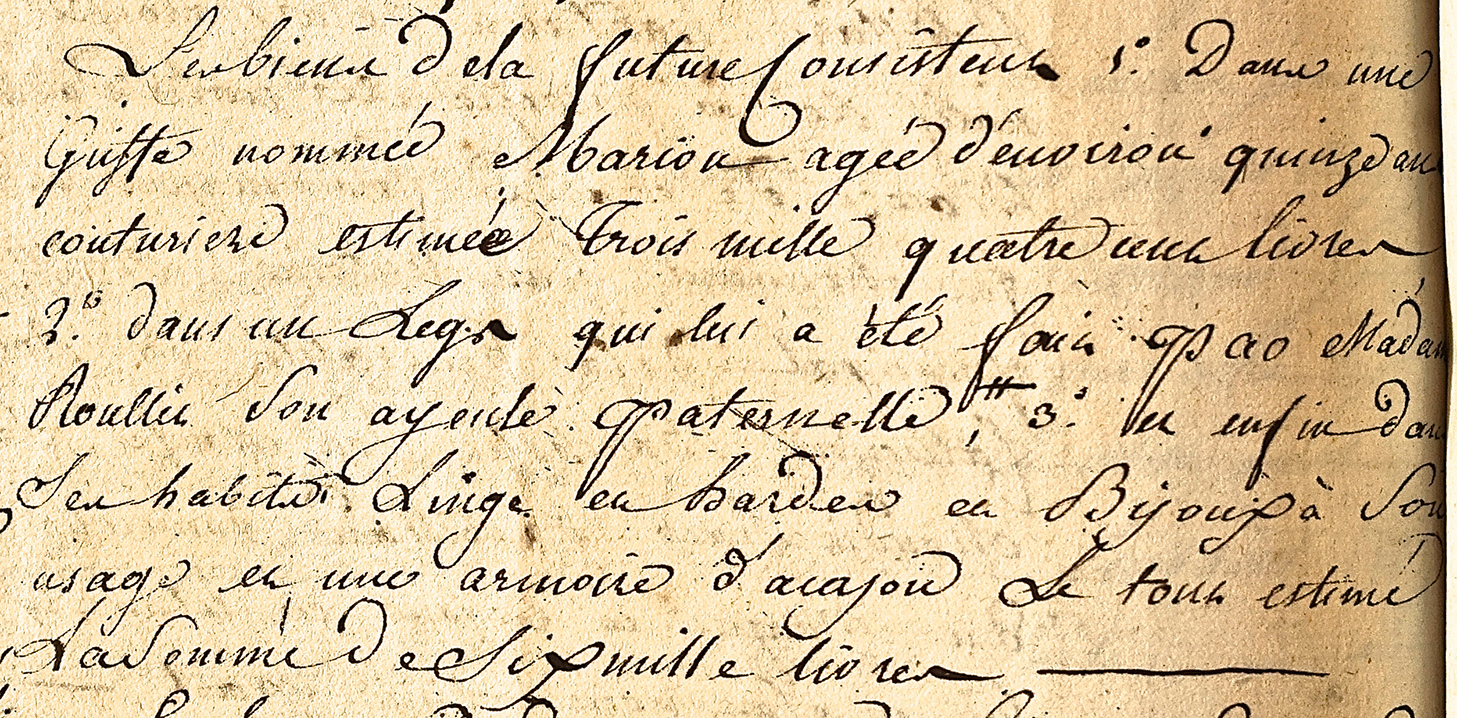
Contrat de Mariage entre M. Robillard et Mlle. Roullit, 1785, August 22 (detail) – DPPC NOT *SDOM 38. Image courtesy of the Archives Nationales (France)
To her marriage, Marie-Françoise-Catherine Roullit brought slaves, an inheritance from her aunt, jewelry, clothes and other personal biens (goods) all together valued at six-thousand livres. The first item on Marie-Françoise-Catherine’s list of biens is: “…1°…une Griffe nommée Marion agée d’environ quinze ans, couturiere estimée trois mille quatre cent livres.” The slave “Griffe” carries different meanings according to different authors, but all refer to some form of mixed-race ancestry. Marion was about fifteen in 1785 and had been trained as a couturière, or seamstress. Marion carried a valuation of three-thousand-four-hundred livres.
The Roullits also promised an additional twelve slaves to be provided over time: six negres nouveau piece d’inde, six young adult male slaves in good health, to be chosen by Charles-Stanislas by January, 1786, and then six autres negres nouveaux, (six more slaves) – each worth at least 2300 livres, also to be chosen by Charles-Stanislas and provided by January, 1787.*
The biens of Charles-Stanislas Robillard consisted of a substantial piece land…and several negres, négresses, animals and other objets mobliers (such as carts and tools) connected with the property.
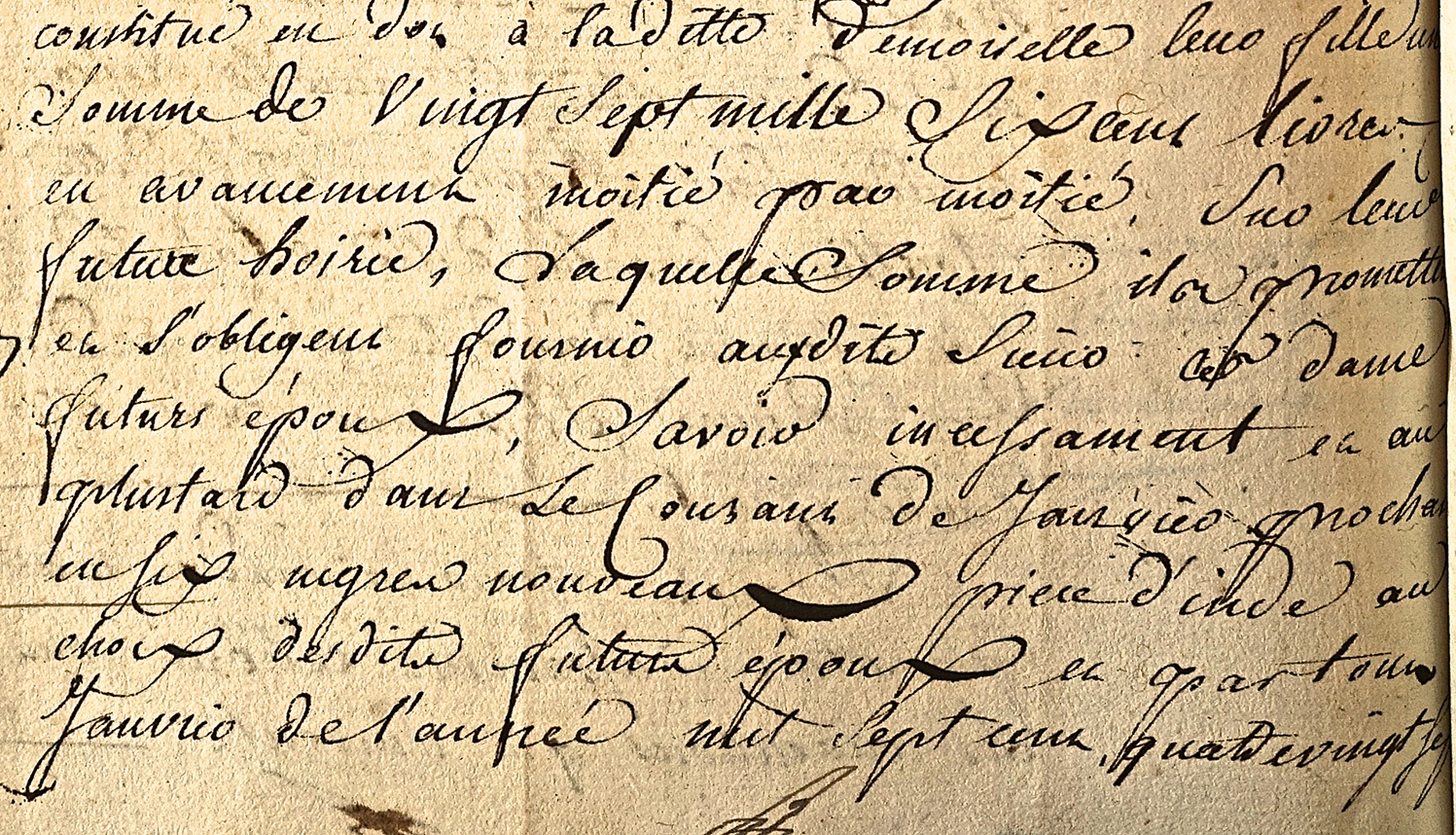
Contrat de Mariage entre M. Robillard et Mlle. Roullit, 1785, August 22 (detail) – DPPC NOT *SDOM 38. Image courtesy of the Archives Nationales (France)
Hector et Jacques
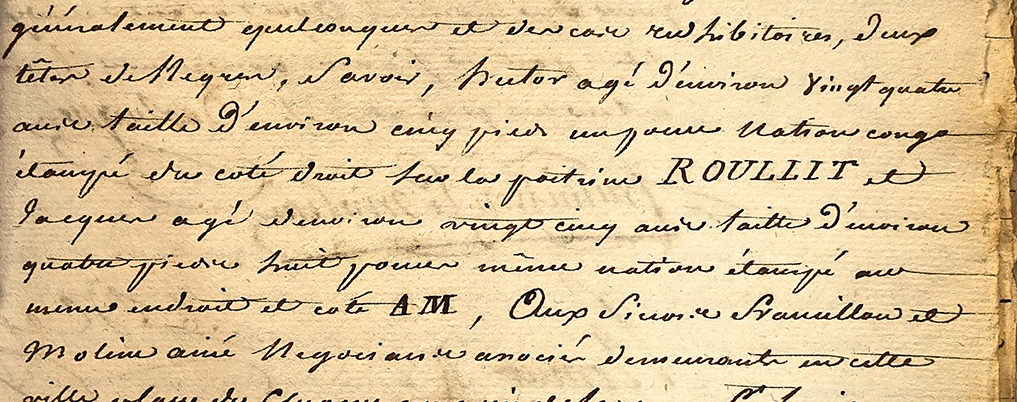
Vente des Négres Sieur Dastague to Sieurs Francillon and Moline, Aug 14, 1777, (detail) DPPC NOT *SDOM 1564. Image courtesy of the Archives Nationales (France)
A second archival document tells us more about the lives of Roullit slaves, and others owned by the colonists of Saint Domingue. A sales agreement dated August 14, 1777, describes the sale of deux têtes de Negres, two male slaves, from Sieur Dastague of Gros Morne to Sieurs Francillon and Moline, négociants (businessmen.) The first slave is identified as Hector, about twenty-four years of age and five feet (French feet) in height, originally from the Congo, and étampé ROULLIT on the left side of his chest. The second individual is Jacques, about 25 years of age, close to five feet in height and also from the Congo, étampé AM in the same place and way. In the context of negres, étampé means branding the owner’s name into the flesh of the slave with a branding iron. The slave Hector carried the name ROULLIT branded on his chest to identify him as the property of one of the Roullits in the colony, prior to becoming the property of Sieur Dastague of Gros Morne. The uncommon nature of the name ROULLIT, and the fact that the sale occurred in Gros Morne, suggest that Hector was branded by Marie-Françoise-Catherine’s family, or by one of her relations. The archives of France and other nations are filled with thousands of documents detailing similar transactions and practices.
Conclusion
Théodore Géricault’s Saint Domingue relations are central to our understanding of the artist and his, not least because of Louis Robillard de Peronville’s activities in Paris after 1798, and family connections to the Barras family in Saint Domingue and Paris. The marriage contract of Charles-Stanislas Robillard and Marie-Françoise-Catherine ‘Katherine’ Roullit adds more detail to our understanding of Robillard life in Saint Domingue in the closing decades of French rule. Katherine Roullit and her family have much to teach us, as well. Slaves, of course, are present in every facet of Saint Domingue life. Their stories are as important as any we tell.
We know that Théodore Géricault had a personal interest in the slave trade. The painter completed a study for a grand painting on the topic entitled Traite des Noirs. A number of critics regard Géricault’s masterpiece: Le Radeau de la Méduse (The Raft of the Medusa) as an argument for abolition. Better understanding the experiences of Géricault family members as slave owners is essential to any discussion of the Théodore Géricault, his art, and slavery. We will continue our discussion of Charles-Stanislas and Marie-Françoise-Catherine, and individuals such as ‘Marion, Hector, and Jacques,’ and their impact on Géricault and his art in issues to come.
The Parish of Gros Morne lies directly south of the Isle de la Tortue and Port Paix.
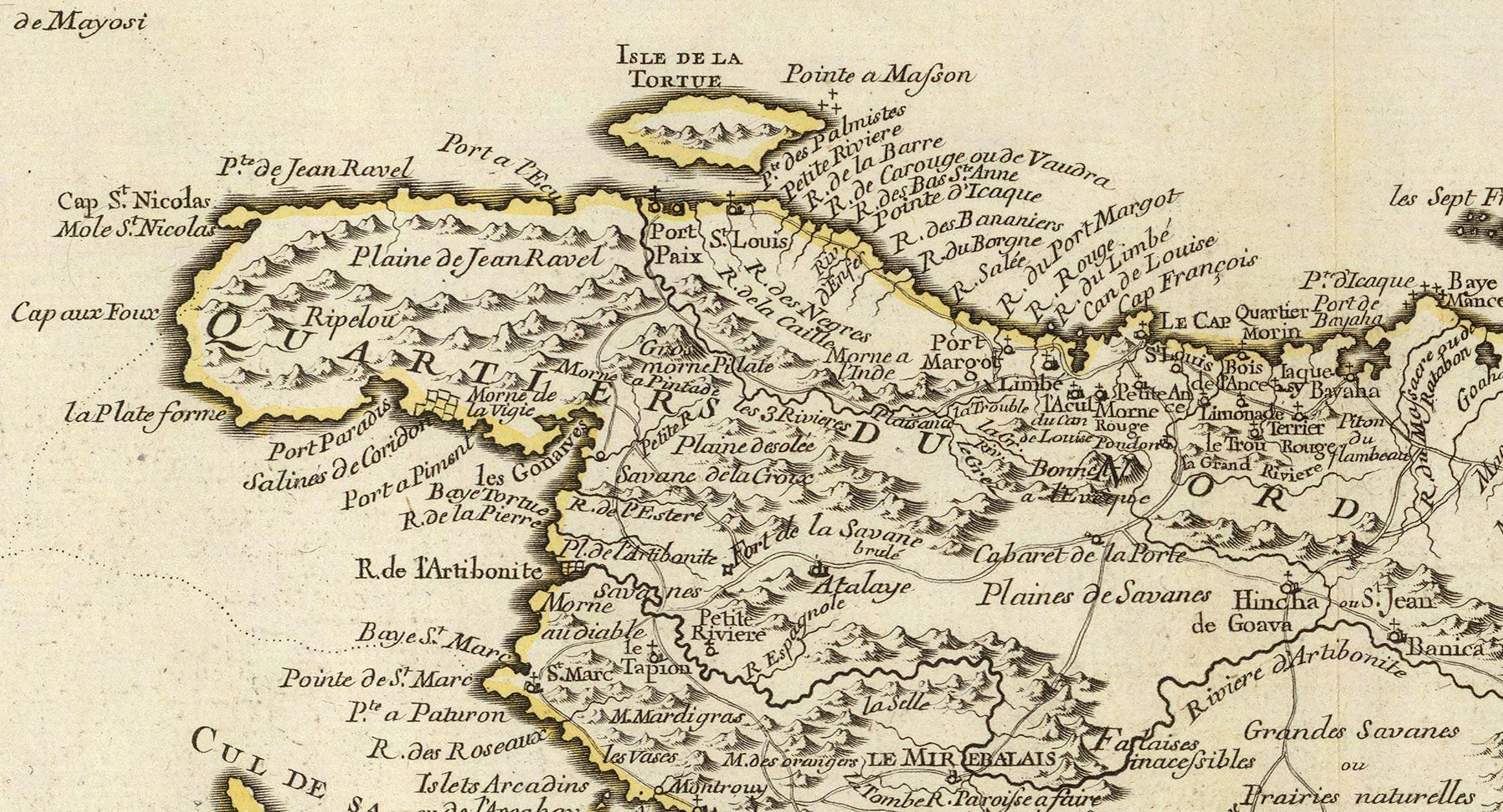
Map: 1725 Guillaume de L’Isle (detail), courtesy of David Rumsey Maps.